
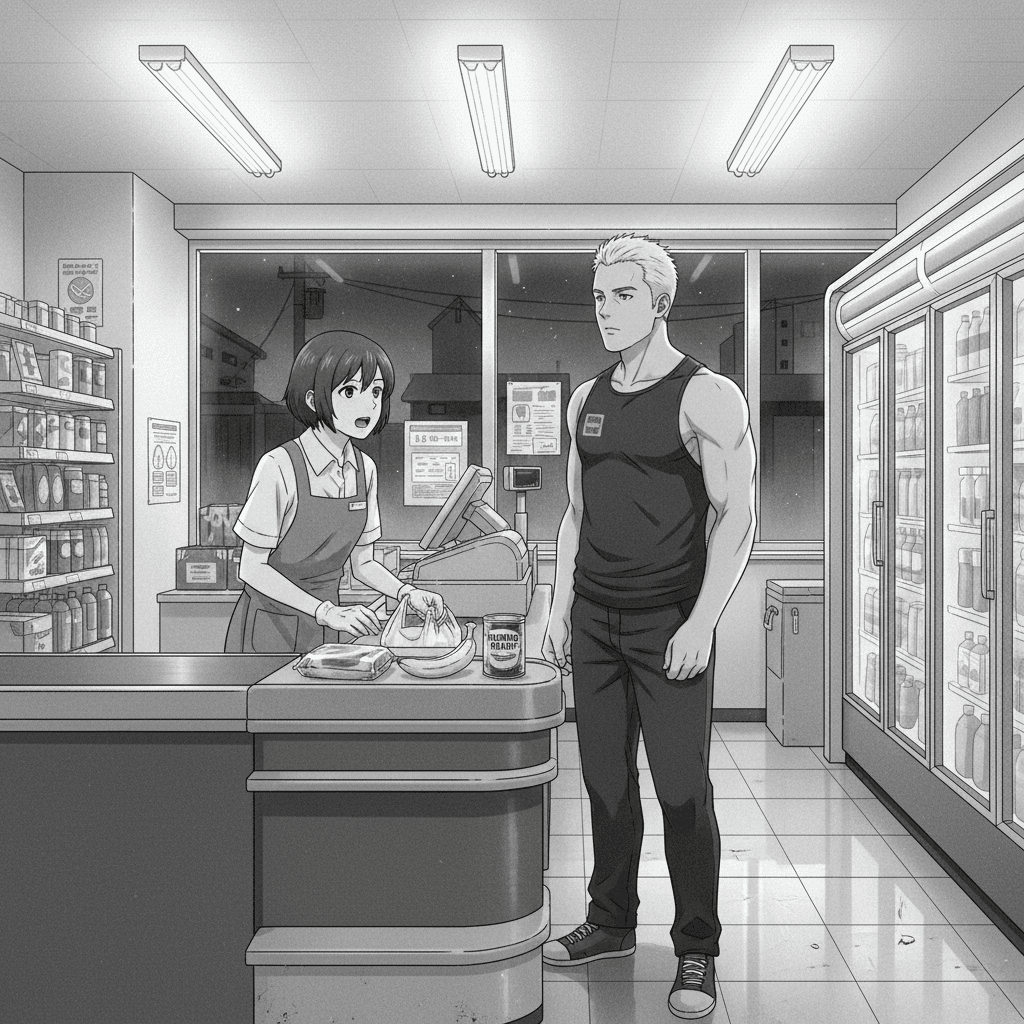
I bought a sandwich, a banana and a tin of coffee. This is not a complicated transaction. This is a transaction so simple that, in any other country, it would happen wordlessly while both parties stared into the middle distance.
In Japan, this transaction took seventy-one seconds.
The cashier — bless him, he was doing his job — asked me, in sequence:
- Did I have a point card?
- Did I want my receipt?
- Would I like a bag?
- If yes, would I like the bag to be heated for the coffee?
- Should the cold sandwich be in its own separate bag?
- Should the banana, which is room temperature, go with the cold sandwich or the hot coffee?
- Did I want chopsticks?
- Did I want a small wet napkin?
- Would I like the receipt placed inside the bag or handed to me separately?
By question six I had begun to dissociate. By question eight I was no longer in the convenience store. I was floating above it, watching a tired man in a uniform ask another tired man in a coat whether his banana had a temperature preference.
The problem isn't the questions. It's the system.
Every single one of those questions is, individually, a sign of a thoughtful and considerate service culture. I am not, despite the title of this piece, against thoughtful and considerate service. I am against being held hostage by it.
There is no opt-out. There is no "just give me the things and the bag." The script must be performed. The customer must be served fully. To wave a hand and skip a step would be to disrespect the entire ¥850-an-hour ritual being conducted on your behalf.
So you stand there. You nod through the questions. And somewhere, in a glass tower in Shinjuku, an executive is reading a satisfaction report and concluding that what the customer really wants is a tenth question.
Comments
…