THE INDICATOR: JAPAN'S MOST DECORATIVE UNUSED FEATURE
Ten years of living here and I've made my peace with a lot. The queuing theatre. The plastic bags. The fax machines. But the indicator — the humble, legally mandated, two-second flick of the wrist — apparently remains optional.
 By The Angry Gaijin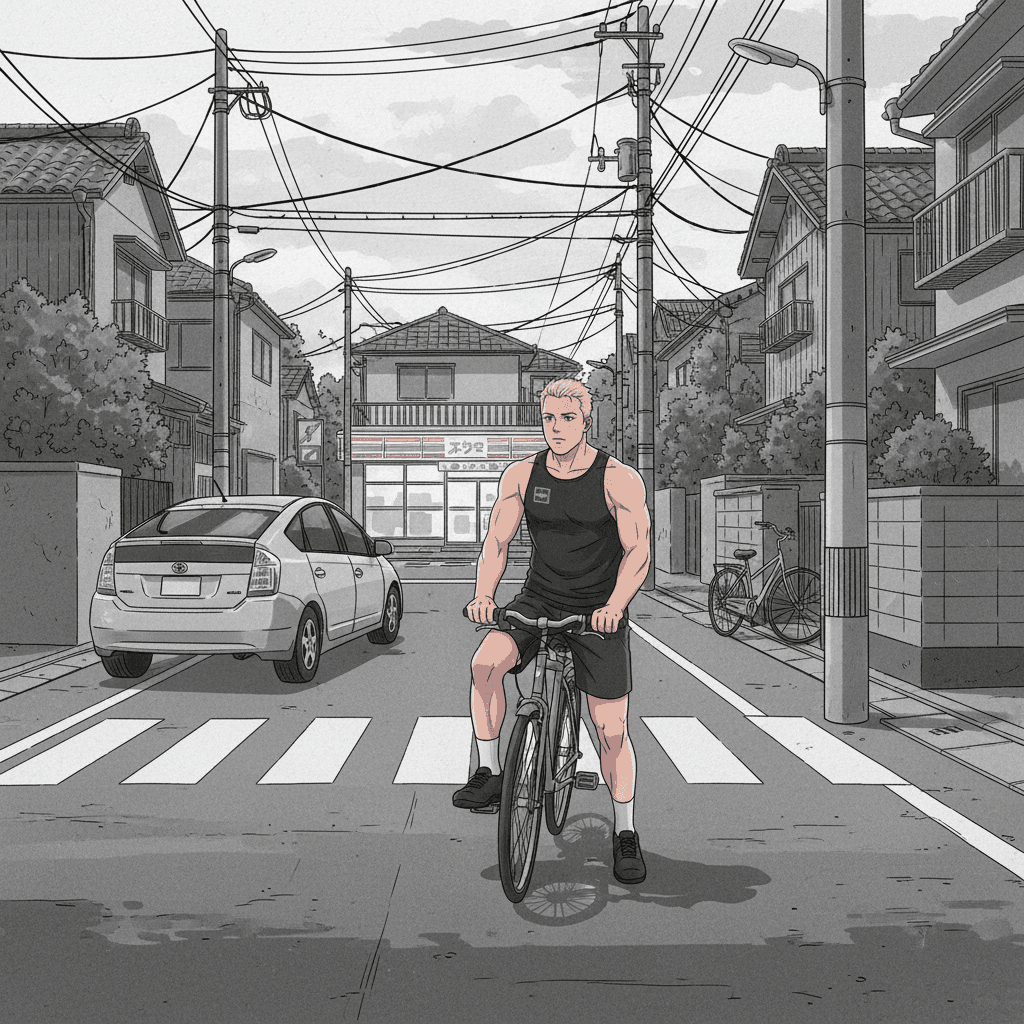
It's a Tuesday morning on a residential backstreet somewhere between my flat and the konbini, and I am on my bicycle, approaching a junction at the cautious pace of a man who has learned not to trust anything with an engine in this city. A silver Prius is rolling towards me. We make eye contact — well, I make eye contact with the windscreen, which is all you ever get. I slow down. He slows down. A gentle diplomatic standoff. And then, without so much as a blink from either rear light cluster, the Prius simply turns left. Right in front of me. Serene. Unhurried. Silent as a war crime.
No indicator. Not even a retrospective one — the apologetic little flash some drivers throw on after the manoeuvre, the vehicular equivalent of saying sorry while stepping on your foot. Nothing. Just the faint hiss of regenerative braking and the quiet dignity of a man who has decided that the laws of physics and the Highway Traffic Act apply to other people.
This is not a one-off. This is every morning. This is a pattern so consistent, so universal, so breathtakingly reliable that I have come to suspect the indicator stalk on Japanese cars is purely ornamental — a vestigial limb of automotive design, retained for aesthetics, never used in anger.
A brief history of the non-event
Now, I want to be careful here, because Japan genuinely produces some of the most courteous, spatially aware, considerately behaved people on the planet. Watch someone boarding the Yamanote line at Shinjuku and you will see kuuki wo yomu — reading the atmosphere — elevated to an art form. People fan out instinctively. Nobody blocks the doors. A man with a large rucksack will turn it to face front without being asked, because he has already calculated the cubic centimetres of inconvenience he might cause and pre-emptively resolved the situation.
And yet. Get that same person behind two tonnes of insulated metal, and something happens. The social contract, so exquisitely maintained on foot, apparently does not extend to road signalling. The indicator — which costs nothing, requires approximately the effort of a nervous tic, and is legally required by Article 53 of the Road Traffic Act — becomes optional. A suggestion. A garnish.
I have developed a theory. In Japan, the indicator is considered a statement of intention, and stating one's intentions too explicitly is, culturally speaking, a bit much. The system runs on tatemae — the public face, the understood position — and there is something almost too nakedly honest about a blinking orange light screaming "I AM TURNING LEFT" to everyone in the vicinity. Far more graceful to simply... turn. Let the movement speak for itself. A true professional needs no preamble.
The physics of optimism
The problem, and I cannot stress this enough, is that I am on a bicycle. I do not have crumple zones. My airbag is my face. When a car turns across my path without warning, the window between "fine" and "very much not fine" is measured in fractions of a second and the quality of my reflexes, which, at this hour of the morning and without sufficient coffee, are frankly not what they were.
I've tried adjusting my approach. I now treat every moving car as a potential silent turner, the way you treat every mushroom in the wild as potentially deadly — with suspicion, distance, and a readiness to abort. I slow down fifty metres before any junction. I watch the front wheels, because the wheels will betray the car before the driver will. I have become, in short, a defensive cyclist of near-professional paranoia, and all because a tiny orange light cannot be bothered to do its one job.
The truly maddening thing is that Japanese drivers are not, on the whole, aggressive. There's no road rage, no horn-honking, no one cutting you up while making eye contact and mouthing something unpleasant. The driving culture is calm, orderly, and deeply, profoundly passive. Which makes the non-indicator all the more baffling. This isn't recklessness. It's something worse. It's indifference dressed up as grace.
Somewhere in a driving school in Nerima right now, a twenty-year-old is being taught to check their mirrors, yield at zebra crossings, and use their indicators. They will pass their test. They will drive impeccably for about six weeks. And then, gradually, the indicator will fall away, like a language you stop practising, and they will join the silent majority, gliding through intersections like ghosts who never got round to haunting anything in particular.
I will be there. On my bicycle. Waiting.
“The indicator — which costs nothing, requires approximately the effort of a nervous tic, and is legally required — becomes optional. A suggestion. A garnish.”
Nobody's raged yet. Set the tone.
You Survived This Article.
Congratulations. You are now contractually obligated to forward it to one other foreign resident who is having a worse week than you.
More Rage Where That Came From
All Rants →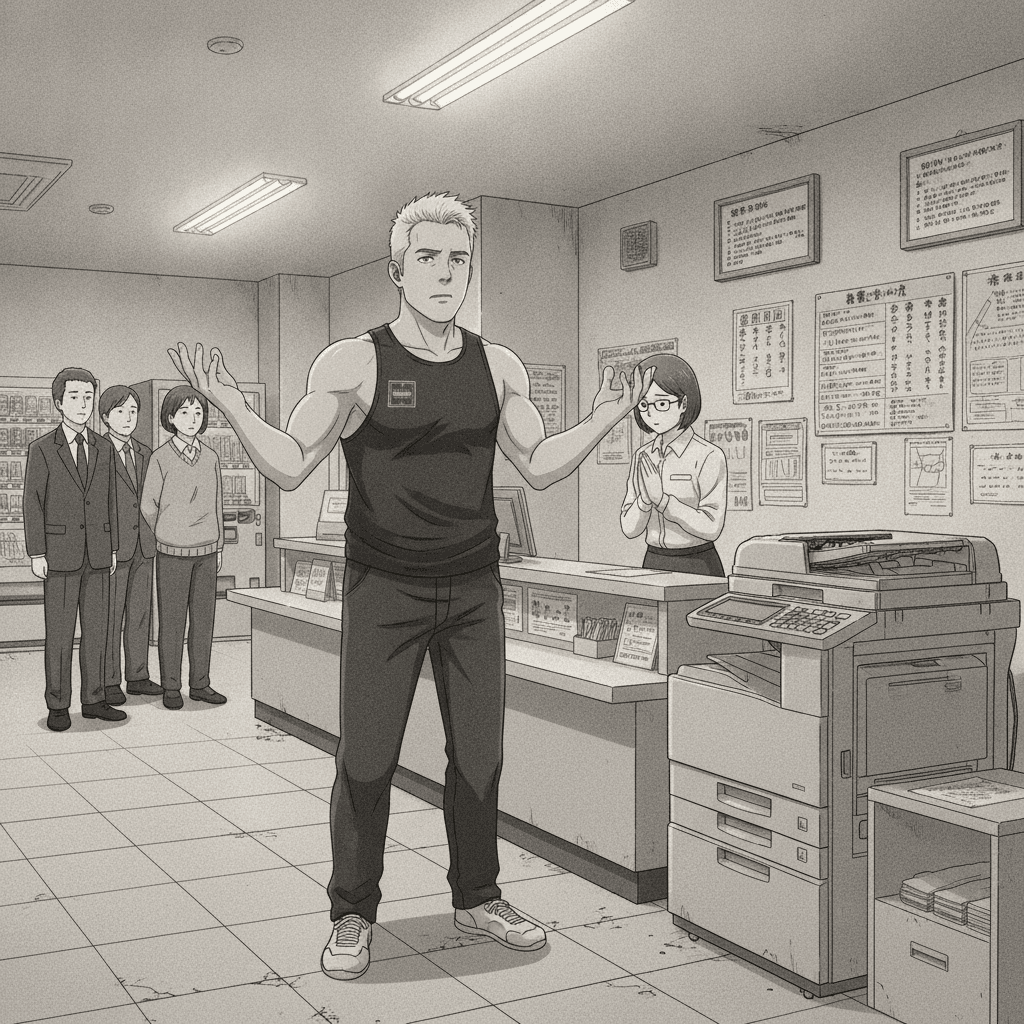
SHOUGANAI: THE MAGIC WORD FOR PEOPLE WHO CAN'T BE ARSED
The Japanese shouganai meaning is supposed to be a graceful acceptance of the unchangeable. In practice it's the most elegant way ever invented to say 'I can't be arsed and you can't make me.'
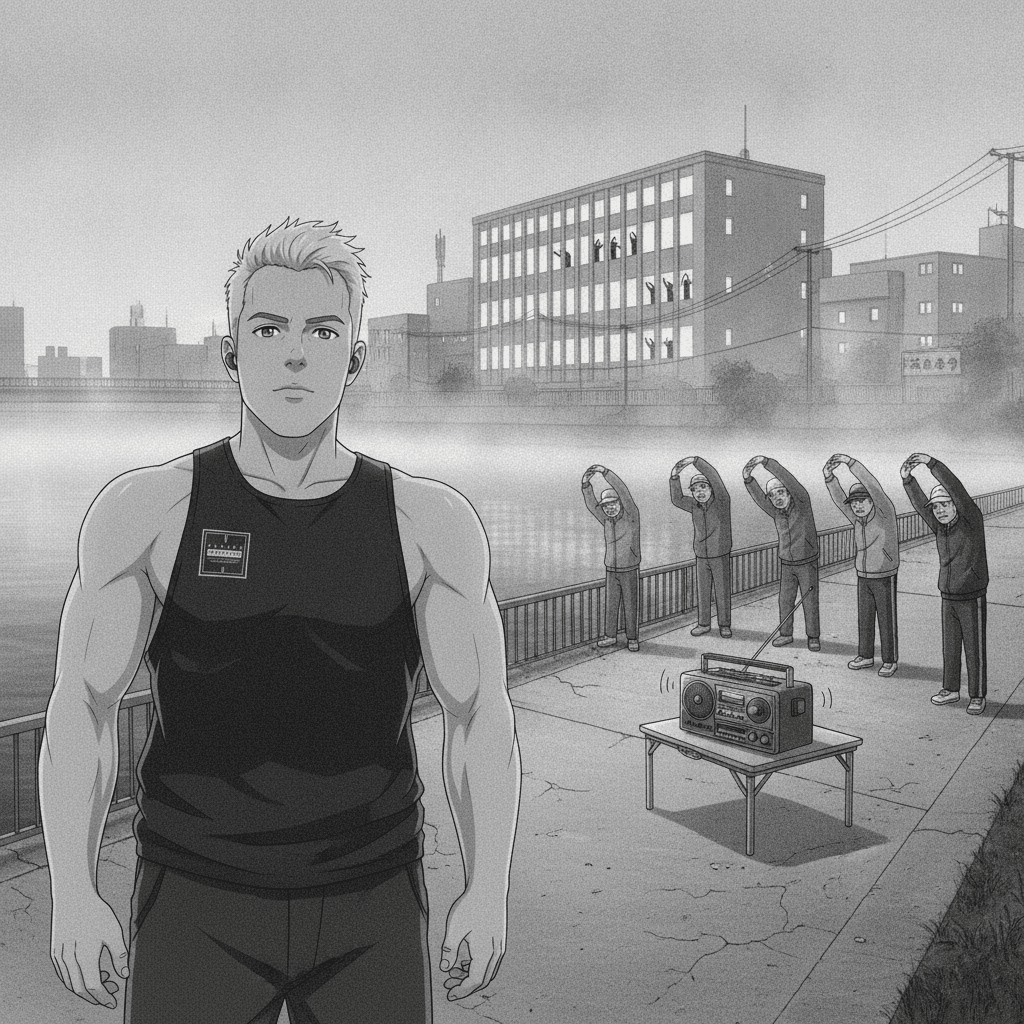
RAJIO TAISO: THE STATE-SANCTIONED STRETCHING CULT NOBODY ASKED FOR
Rajio taiso, the nationwide morning radio calisthenics ritual, is not exercise. It is a compulsory group performance of belonging, broadcast at dawn to people who would rather be asleep.
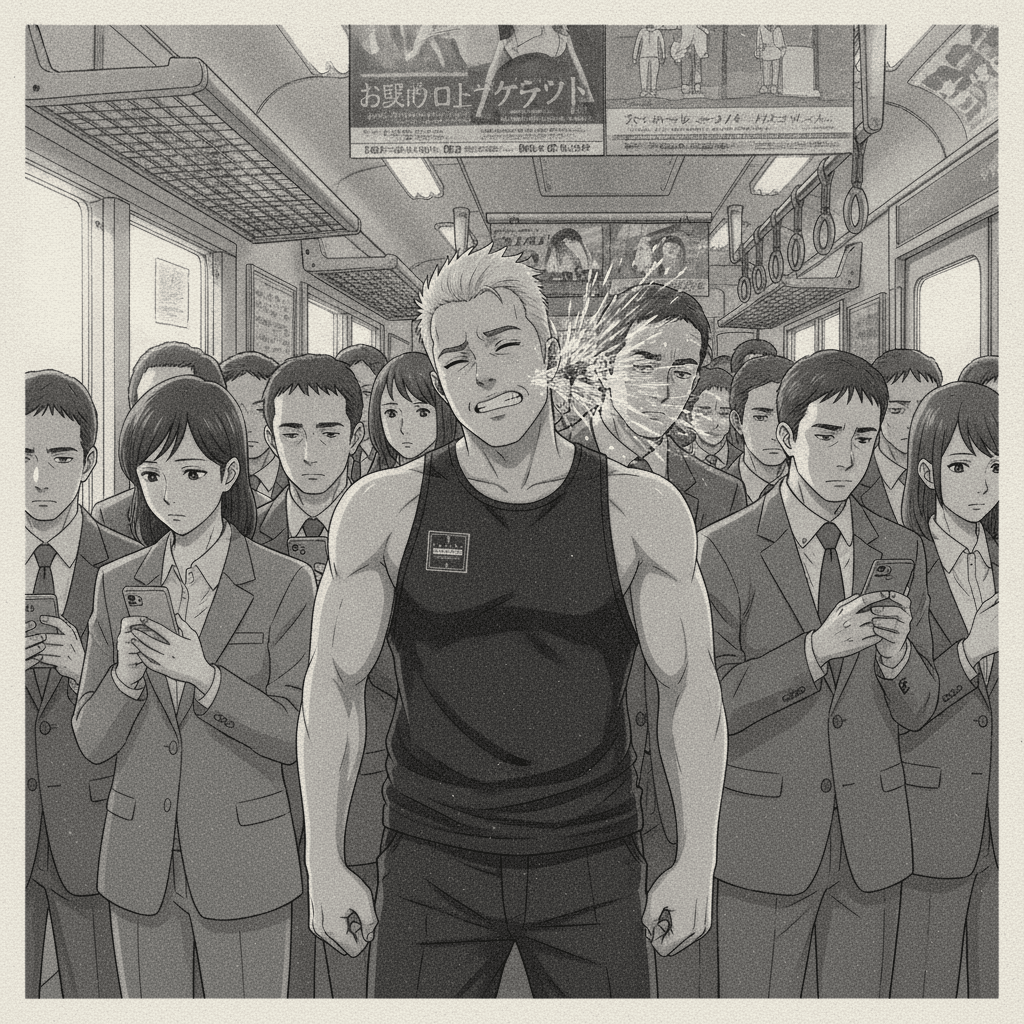
THE SALARYMAN SNEEZE: 500 DECIBELS OF PURE DEFIANCE
In a country obsessed with silence and reading the room, the Japanese salaryman sneeze detonates like an artillery shell on the 7:42 Yamanote. Nobody flinches. Nobody comments. It is the loudest permitted sound in the quietest culture on Earth.
Comments
…