
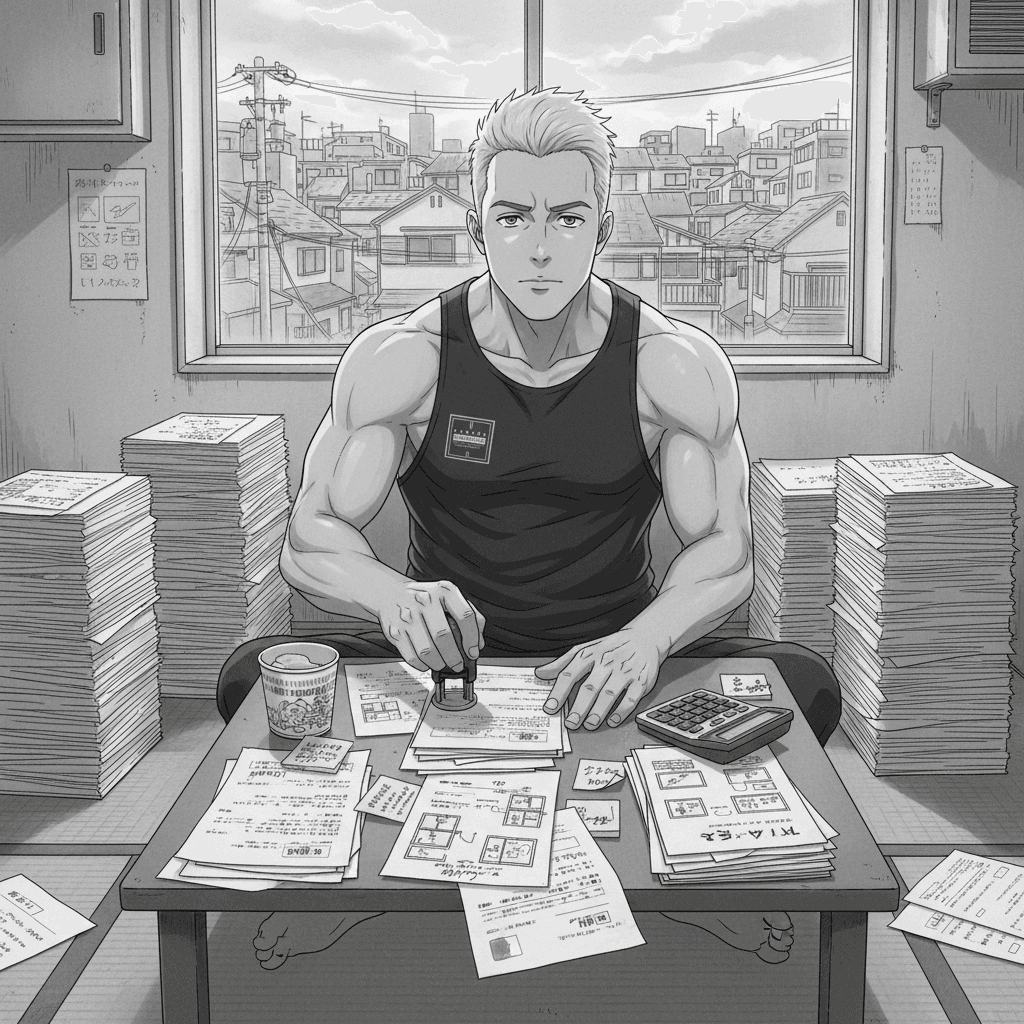
Renting an apartment in Tokyo is not a transaction. It is a campaign. You will need a party. You will need a save point. You will need, ideally, a Japanese co-signer who owes you a favour from a previous life.
The fourteen bosses
-
The Listing. Beautifully photographed, suspiciously cheap. It is no longer available, and it never was.
-
The Estate Agent. He will show you twelve other apartments, all of which face a car park.
-
The Gaijin Filter. Many landlords have a quiet policy of not renting to foreigners. The agent will pretend this is not a thing while routing you around all the ones that have it.
-
The Application Form. Ten pages. In Japanese. Asks for your blood type. (Yes, your blood type. They want to know if you are an A.)
-
The Income Proof. Three years of tax returns, even though you have lived here for one.
-
The Guarantor Company. A private company that, for a fee equal to half a month's rent, will agree to pay your rent if you don't. Yes, you still also need the deposit.
-
The Reikin. "Key money." A non-refundable gift to the landlord. The rental equivalent of someone asking you to pay them, as a one-off, for the privilege of paying them every month forever.
-
The Shikikin. The deposit. Refundable. (It is not refundable.)
-
The Hoshou. The guarantor fee, again, because nobody believes in you.
-
The Cleaning Fee. Paid up-front. The apartment is already clean. You will be cleaning it when you leave.
-
The Insurance. Mandatory. Two years up front. From a company you have never heard of.
-
The Interview. The landlord wants to meet you. To check, you know, the vibes.
-
The Stamp Day. You will spend a full afternoon at a small table, stamping forty pieces of paper with the wooden cylinder.
-
The Move-In. The lights don't work. There is no fridge. The previous tenant has left a plastic bag of mysterious noodles in the cupboard.
Welcome home.
Comments
…